


APEC:
The Asia-Pacific Economic Cooperation (APEC) is a regional economic forum established in 1989 to leverage the growing interdependence of the Asia-Pacific. APEC's 21 members aim to create greater prosperity for the people of the region by promoting balanced, inclusive, sustainable, innovative and secure growth and by accelerating regional economic integration.
APEC has 21 members. The word 'economies' is used to describe APEC members because the APEC cooperative process is predominantly concerned with trade and economic issues, with members engaging with one another as economic entities.
APEC Members | Date of Joining
Australia 6-7 Nov 1989
Brunei Darussalam 6-7 Nov 1989
Canada 6-7 Nov 1989
Chile 11-12 Nov 1994
People's Republic of China 12-14 Nov 1991
Hong Kong, China 12-14 Nov 1991
Indonesia 6-7 Nov 1989
Japan 6-7 Nov 1989
Republic of Korea 6-7 Nov 1989
Malaysia 6-7 Nov 1989
Mexico 17-19 Nov 1993
New Zealand 6-7 Nov 1989
Papua New Guinea 17-19 Nov 1993
Peru 14-15 Nov 1998
The Philippines 6-7 Nov 1989
Russia 14-15 Nov 1998
Singapore 6-7 Nov 1989
Chinese Taipei 12-14 Nov 1991
Thailand 6-7 Nov 1989
The United States 6-7 Nov 1989
Viet Nam 14-15 Nov 1998
What Does APEC Do?
APEC ensures that goods, services, investment and people move easily across borders. Members facilitate this trade through faster customs procedures at borders; more favorable business climates behind the border; and aligning regulations and standards across the region. For example, APEC's initiatives to synchronize regulatory systems is a key step to integrating the Asia-Pacific economy. A product can be more easily exported with just one set of common standards across all economies.
DSD & APEC COLLABORATION
Ministry of Human Resources together with DSD determines the direction and also the projects that will be carried out for TVET. DSD also participates in programmes organized by APEC


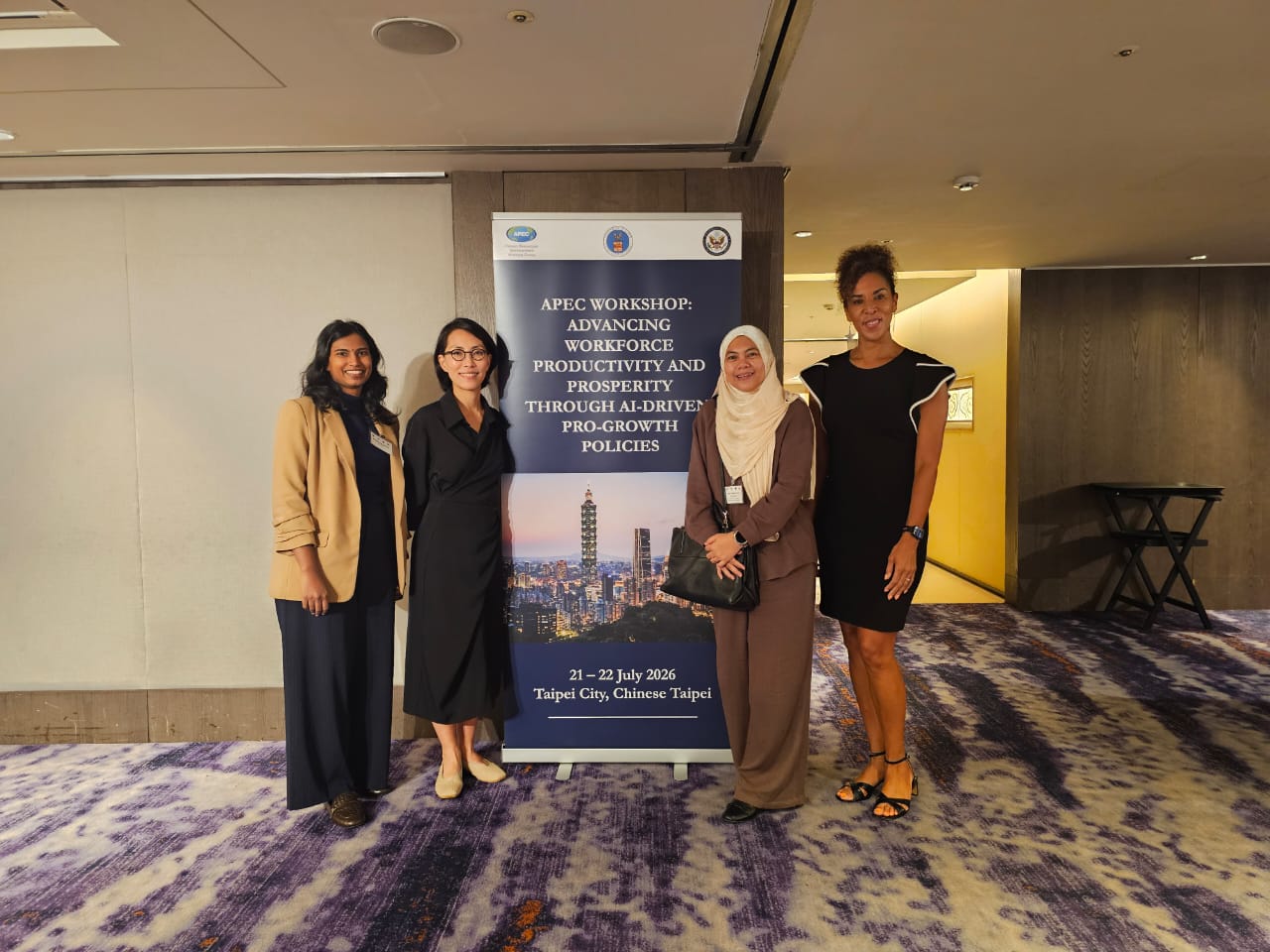
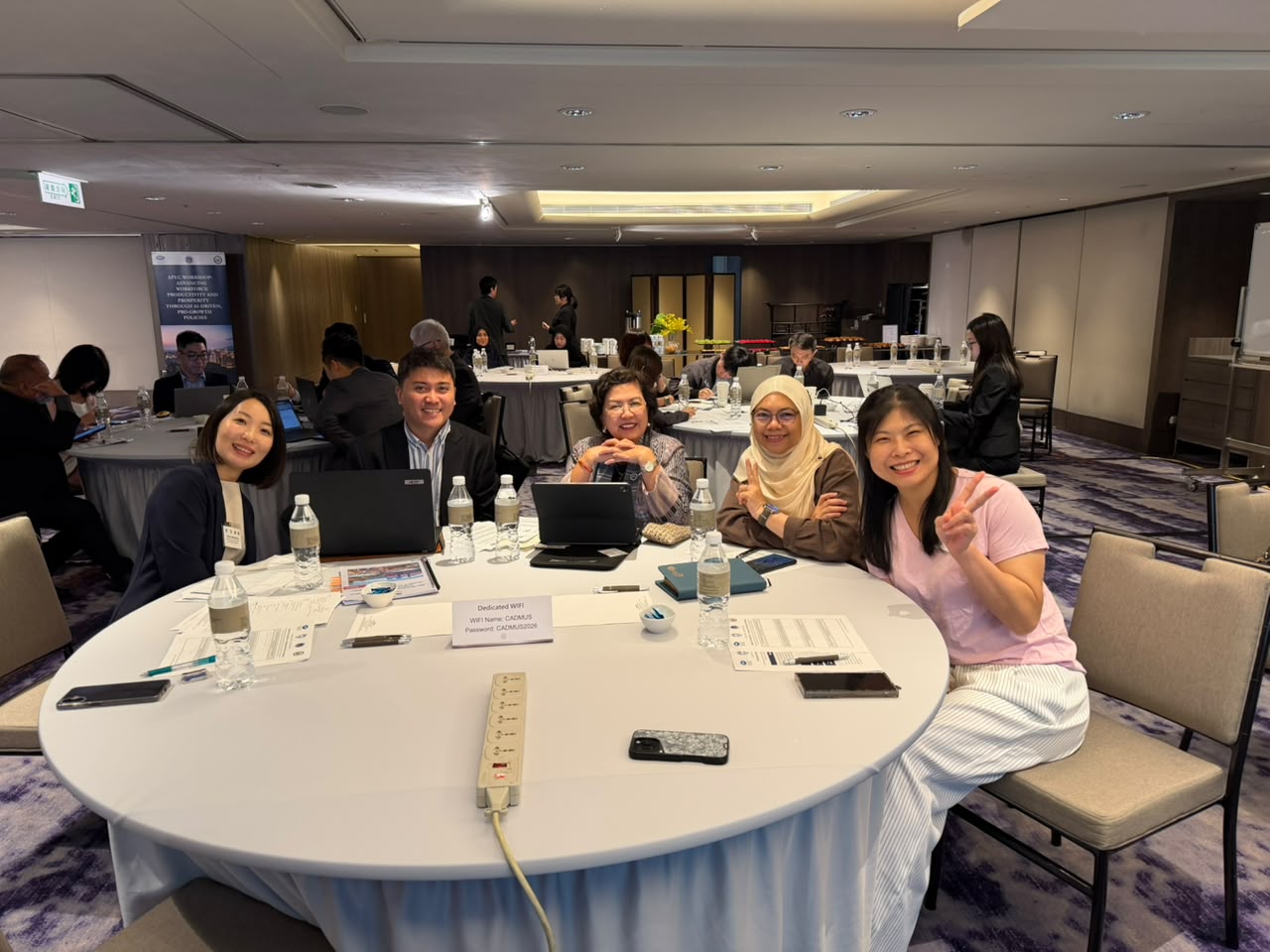
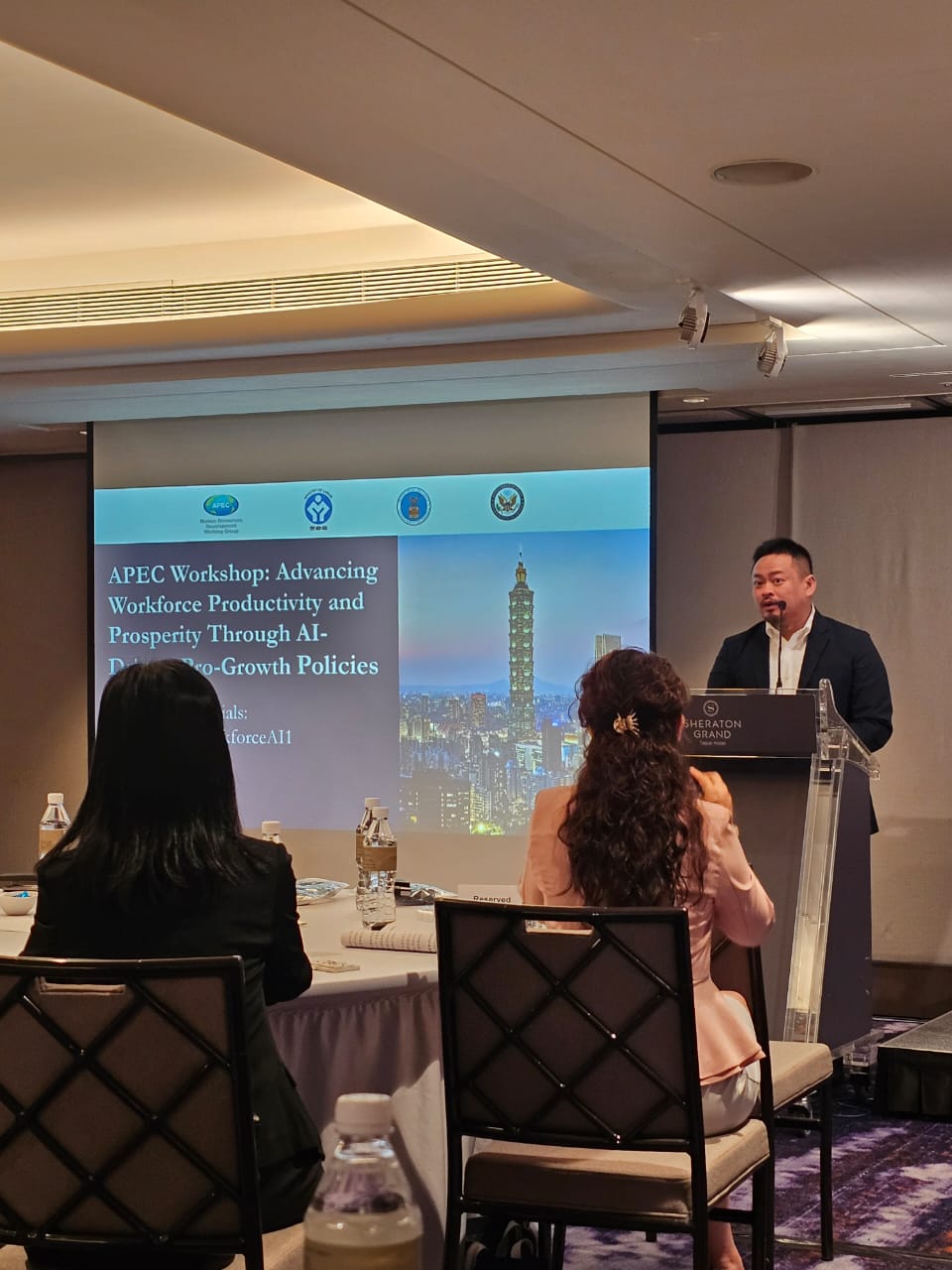
WORKFORCE PRODUCTIVITY AND PROSPERITY THROUGH AI-DRIVEN, PRO-GROWTH POLICIES
Venue: Taipei City
Date: July 21, 2026
The Department of Skills Development (DSD) was officially represented by Dr. Nor Salwa binti Hamdan, Senior Principal Assistant Director of the Information Management Unit (Planning, Development and International Division), at the APEC Workshop on Advancing Workforce Productivity and Prosperity Through AI-Driven, Pro-Growth Policies.
The two-day international workshop was organized by the APEC Human Resources Development Working Group (HRDWG) and took place from 21 to 22 July 2026 in Taipei City.
The workshop convened representatives, experts, and policymakers across APEC member economies to exchange insights, practical strategies, and policy approaches on leveraging Artificial Intelligence (AI) to enhance workforce productivity, improve job quality, ensure workplace safety, and foster overall workforce readiness amid rapid technological transitions.
Key Takeaways and Strategic Follow-up for DSD
Based on sessions and best practices shared during the workshop, several strategic initiatives were identified to strengthen Malaysia's skills development framework:
Strengthening NOSS as a National Skills Language:
Exploring approaches to broaden the role of the National Occupational Skills Standard (NOSS) as a common competency reference language bridging jobs, skills, training, certification, and industry needs, including enhancing skills data interoperability.
Dynamic, Data-Driven NOSS Development:
Establishing a data-driven NOSS review mechanism utilizing industry demand indicators, emerging technology trends, and graduate outcomes to strategically prioritize, update, and develop new standards.
Integrating AI Competencies into Work Activities:
Identifying occupations impacted by AI advancements and embedding "AI-assisted competencies" into relevant work activities, while continuing to emphasize task-based training and human professional judgment.
Through active engagement in multilateral platforms such as APEC HRDWG, DSD continues to align national TVET standards and digital skills policies with regional benchmarks to cultivate a highly competitive and future-ready workforce
Reported by : Dr. Nor Salwa binti Hamdan


